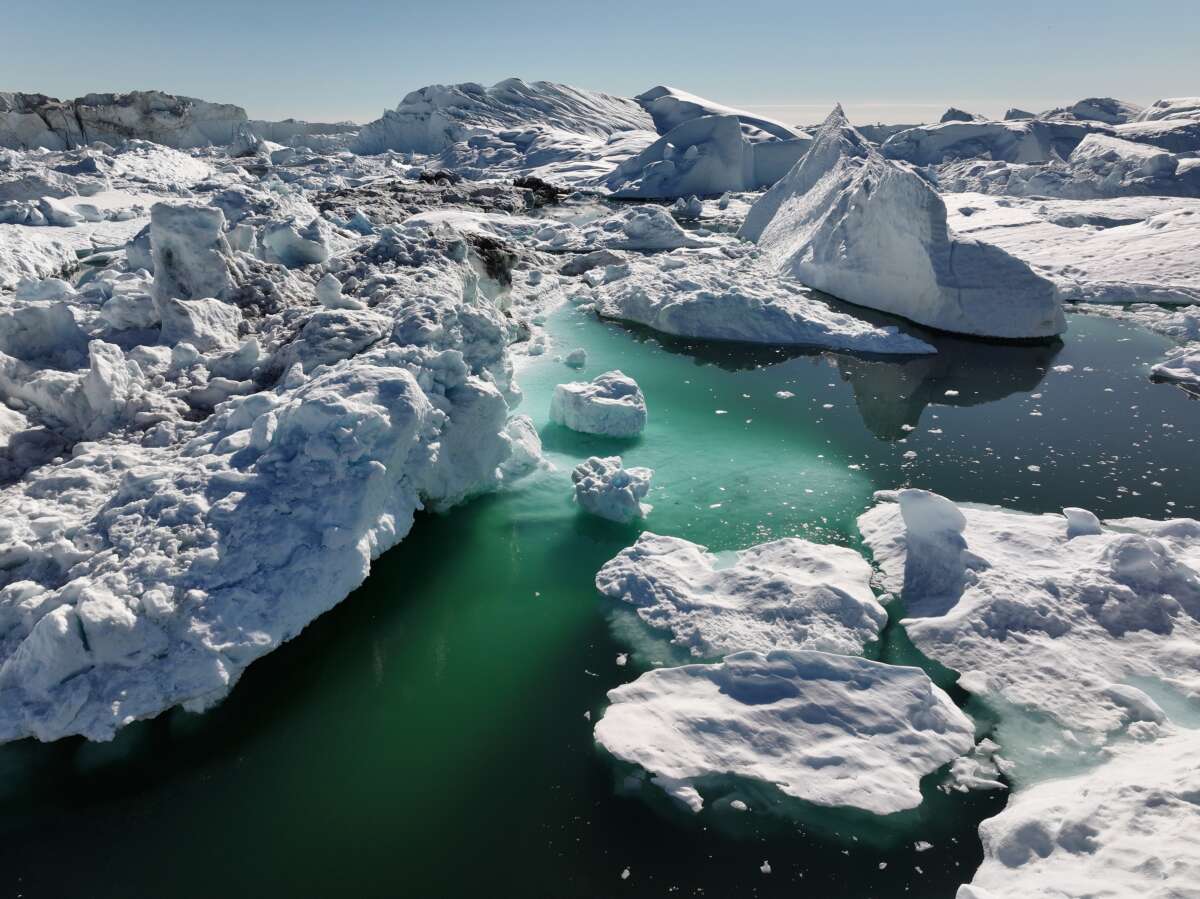
UPDATE: The Arctic has officially recorded its hottest year on record from October 2024 to September 2025, according to the latest findings from the National Oceanic and Atmospheric Administration (NOAA). This alarming trend, detailed in the newly released 2025 Arctic Report Card, highlights the severe impacts of the climate crisis on this fragile region.
The report, released earlier today, reveals that the Arctic experienced not only its highest air temperatures but also its lowest maximum sea-ice extent and wettest year on record. The last decade has seen temperatures in the Arctic rise at a staggering rate of two to four times the global average.
Matthew Langdon Druckenmiller, one of the report’s editors, emphasized the urgency of this situation, stating, “After 20 years of continuous reporting, the Report Card stands as a chronicle of change and a caution for what the future will bring.” The report warns that the next 20 years will reshape Arctic environments and ecosystems, posing significant risks to communities and the global climate system.
Key findings from the report indicate that fall 2024 was the warmest Arctic fall on record, followed by the second-warmest winter in early 2025. Snow cover has dramatically declined, with June snow levels now at roughly half of what they were in the 1960s. The report also notes that March 2025 recorded the lowest maximum sea-ice extent in nearly 50 years of satellite observations.
The impacts of this warming extend beyond mere temperature increases. On land, the “greening” of the tundra has allowed southern species to spread northward, while at sea, a phenomenon known as “Atlantification” is exacerbating ice melt and threatening ocean circulation patterns.
While the report outlines these transformations, it also highlights the human toll. Warming oceans and melting glaciers are increasing weather hazards for Arctic communities. For example, ex-Typhoon Halong in October 2025 forced over 1,500 people to evacuate from Alaska’s southwestern coast, devastating two villages.
“The trajectory is just incredible,” stated the director of the Copernicus Climate Change Service. Druckenmiller also warned, “We are no longer just documenting warming — we are witnessing an entire marine ecosystem transform within a single generation.” This transformation is not just an Arctic issue; the report points to cascading effects on global sea levels as the Greenland ice sheet lost 129 billion tons of ice, directly contributing to rising seas worldwide.
Further complicating these findings, the report notes the chilling implications of federal funding cuts under the Trump administration, potentially jeopardizing future climate research. However, officials at NOAA confirmed that their results were free from political interference, despite the absence of explicit calls for global reductions in fossil fuel pollution that were present in previous reports.
The 2025 Arctic Report Card serves as a stark reminder of the urgent need for climate action. As temperatures continue to rise, the ramifications will increasingly affect not just the Arctic but the entire planet.
As this situation develops, officials urge global leaders to prioritize climate initiatives to mitigate these alarming changes. The time for action is now—what happens next will determine the future of both the Arctic and our global climate.