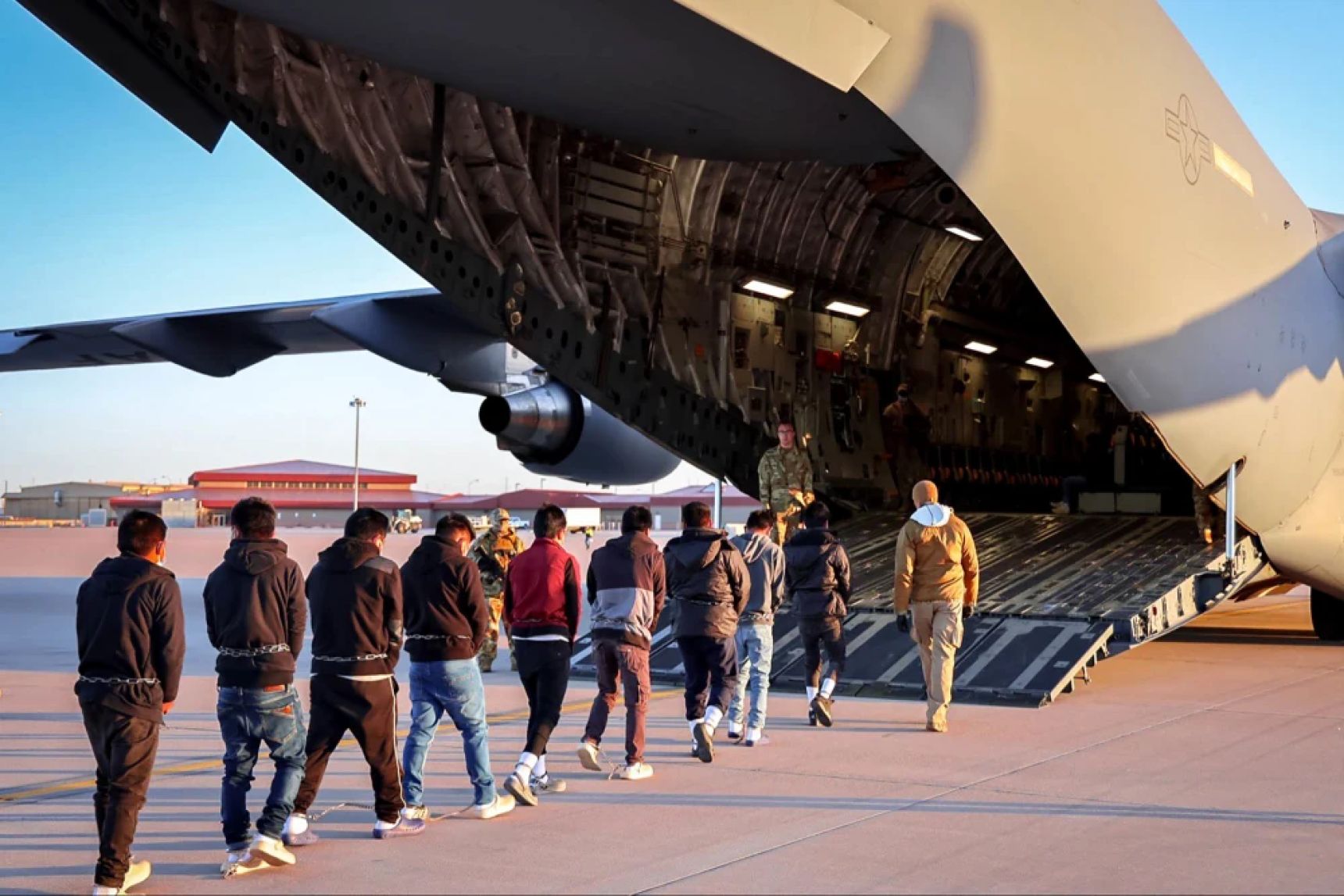
On July 15, 2023, 62-year-old Orville Etoria found himself on a plane bound for a destination he had never heard of. Along with four other men, he was taken from the Immigration and Customs Enforcement (ICE) detention center in El Paso without any explanation. Initially expecting to be repatriated to Jamaica, Etoria soon discovered that he was part of a secretive U.S. immigration agreement with Eswatini, a small landlocked country in southern Africa. This deal has drawn criticism for its implications on human rights and due process.
Upon landing in Djibouti, Etoria and the others were transferred to a U.S. military transport aircraft. It was only as they were descending towards Eswatini that they were informed of their destination. Mia Unger, Etoria’s attorney from the Legal Aid Society, described the situation as a “grotesque abuse of government power.” The agreement, signed in May 2023, allowed the U.S. to send deportees to Eswatini without proper notification or legal procedures.
The narrative surrounding these deportations has been framed by U.S. officials as a necessary measure against violent criminals. However, the reality is more complex. Many of the deportees, including Etoria, had previously completed their sentences in the U.S. and were living under ICE supervision, awaiting legal resolution of their cases. The U.S. Department of Homeland Security (DHS) is utilizing a seldom-used provision allowing for deportations to third countries when repatriation to the country of origin is deemed “impracticable, inadvisable, or impossible.”
This method has raised alarm among human rights advocates. The men deported to Eswatini were placed in Matsapha, the country’s maximum-security prison, without any formal charges or legal recourse. Human Rights Watch has described the arrangement as a violation of the principle of non-refoulement, which prohibits sending individuals to places where they may face harm.
Legal and Humanitarian Concerns
The agreement between the U.S. and Eswatini is a nonbinding memorandum that permits the transfer of up to 160 deportees within a one-year period, backed by a funding of $5.1 million for “capacity-building.” Critics argue that this arrangement effectively sidelines basic legal rights and due process. The deportees are being held indefinitely, lacking access to legal representation and the ability to contest their detention or the conditions of their transfer.
The legal implications of these actions are currently being scrutinized in a case known as D.V.D. v. DHS in the U.S. Court of Appeals. This case may determine the necessary processes and rights for individuals facing deportation to third countries. According to Jaya Ramji-Nogales, a law professor at Temple University, the U.S. is circumventing legal safeguards designed to protect individuals from arbitrary detention and deportation.
Despite the troubling nature of these transfers, the second cohort of ten men was sent to Eswatini on October 6, 2023, under the same agreement. These men, originally from countries like Cambodia, Chad, and Cuba, now find themselves facing similar uncertainties. Sibusiso Nhlabatsi, a local lawyer, has encountered numerous obstacles in accessing his clients, reflecting the broader challenges of legal representation for the detainees.
Global Implications and Future of the Agreement
This trend of outsourcing deportations to African nations raises significant ethical and legal questions. Countries such as South Sudan, Uganda, and Ghana have also entered into similar agreements with the U.S., leading to concerns about the treatment of deportees in jurisdictions with limited legal protections. The lack of transparency in these arrangements has led to widespread criticism from human rights organizations.
Lawyers and advocates argue that this approach represents a troubling shift in U.S. immigration policy, seeking to eliminate legal accountability while transferring individuals to nations with inadequate legal frameworks. This situation has created a climate of fear among immigrants, many of whom are now seeking alternative pathways to avoid deportation to countries where they have no ties.
As the legal challenges continue, individuals like Etoria remain in limbo. After spending over two months in detention, he was ultimately repatriated to Jamaica on September 22, 2023, the only deportee to return home thus far. The future for the remaining detainees remains uncertain as they navigate a complex and opaque legal landscape.
The implications of these agreements extend beyond individual cases, touching on the fundamental principles of justice and human rights. The ongoing situation calls for a deeper examination of U.S. immigration practices and their impact on vulnerable populations. The need for transparency, accountability, and humane treatment of all individuals within the immigration system has never been more critical.