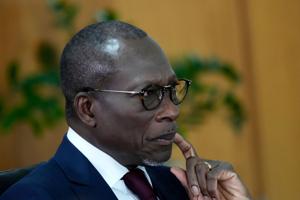
Benin’s President Patrice Talon publicly condemned an attempted coup on December 7, 2025, which was thwarted by the nation’s military forces. Sporadic gunfire erupted in the administrative capital, Cotonou, as a group of soldiers attempted to announce the dissolution of the government, claiming to represent the “Military Committee for Refoundation.” This incident marks the latest in a series of military takeovers that have destabilized parts of West Africa in recent months.
In a televised address, President Talon expressed his condolences to the victims of what he described as a “senseless adventure” and offered support to those still held by the fleeing mutineers. His comments came after Interior Minister Alassane Seidou confirmed in a video message that the coup attempt had been successfully foiled, although Talon’s specific whereabouts during the crisis remained unclear.
The coup attempt unfolded in the early morning, with Seidou detailing that a small contingent of soldiers aimed to destabilize the state and its institutions. The Beninese Armed Forces responded quickly, reaffirming their commitment to the republic. Seidou stated, “Faced with this situation, the Beninese Armed Forces and their leadership, true to their oath, remained committed to the republic.”
In response to the instability, the Economic Community of West African States (ECOWAS) deployed troops from Nigeria, Sierra Leone, Ivory Coast, and Ghana to assist Benin’s military in preserving constitutional order. ECOWAS condemned the attempted coup, labeling it “a subversion of the will of the people of Benin.”
Nigerian President Bola Tinubu praised the involvement of the Nigerian armed forces, stating that Benin’s government had made two requests for military assistance. According to a statement from the Nigerian government’s spokesperson, Bayo Onanuga, government forces took several hours to regain control and expel the coup plotters from the national television station.
Reports from local media indicated that 13 soldiers involved in the coup attempt were arrested, while the status of Lt. Col. Pascal Tigri, the alleged leader of the coup, remained uncertain. Despite the earlier unrest, Cotonou has since returned to a relatively calm state, with soldiers patrolling key areas.
Historically, Benin has experienced multiple coups since gaining independence from France in 1960. However, the nation has enjoyed political stability since 1991, following a lengthy period under the rule of Marxist-Leninist leader Mathieu Kérékou. Talon, who has been in power since 2016, is expected to step down after the upcoming presidential election in April 2026, where his party’s candidate, former Finance Minister Romuald Wadagni, is considered the frontrunner. Opposition candidate Renaud Agbodjo was disqualified by the electoral commission due to insufficient sponsorship.
The recent coup attempt adds to the political tension in the region, where military takeovers have become increasingly common. In January, two associates of Talon received 20-year prison sentences for their involvement in an alleged 2024 coup plot. Furthermore, the legislature recently extended the presidential term from five to seven years while maintaining a two-term limit.
As the situation unfolds, President Talon assured citizens that every effort would be made to ensure their safety and recover any hostages still held by the mutineers.