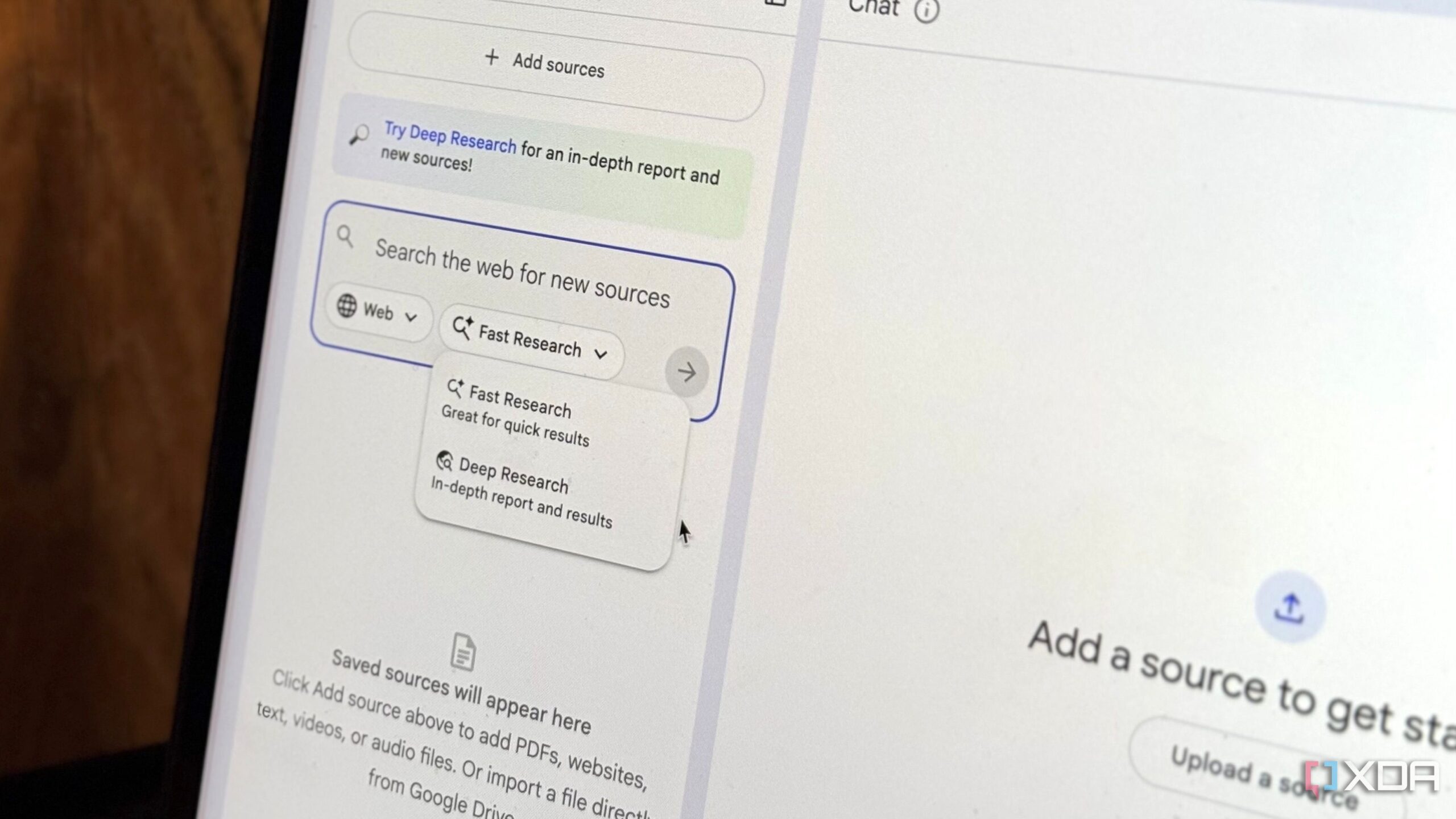
Google’s latest enhancement to its AI tool, NotebookLM, has transformed how users conduct research. By integrating the Deep Research mode from the Gemini chatbot, NotebookLM now offers a more dynamic source discovery process. This upgrade allows users to access relevant information more efficiently and effectively, particularly when exploring complex topics.
Researching a topic can often feel overwhelming, especially when starting from scratch. Users frequently find themselves sifting through basic articles or irrelevant forum posts. With the new capabilities of NotebookLM, individuals can input their specific learning objectives, such as “The impact of regulatory changes on crypto-staking in 2025.” The AI then formulates a structured research plan, generating a comprehensive report that serves as a solid foundation for further exploration.
Streamlined Source Discovery
Previously, users had to manually search for sources, which could be time-consuming and unproductive. The integration of Deep Research into NotebookLM simplifies this process. Users are now presented with one-line descriptions of citations, making it easier to select and add sources directly to their notebooks. This feature significantly enhances the user experience, allowing for a more efficient accumulation of knowledge.
When delving into niche topics, such as sustainable coffee, the challenges of traditional search engines become apparent. These platforms often yield repetitive information that fails to provide the depth required for thorough understanding. Deep Research excels in this area by identifying specialized documents, such as white papers and detailed reports, that fill gaps in users’ existing knowledge bases. This capability saves time and effort, as users can bypass the lengthy process of scouring multiple platforms.
High-Quality Document Retrieval
NotebookLM’s focus on academic and technical content means that users can expect high-quality results, particularly when searching for technical papers. The tool’s ability to “think” and plan its searches can uncover valuable PDFs and long-form content that typical search engines might overlook. While users conduct their own research, Deep Research operates in the background, effectively doubling the productivity of the research process.
In addition to improving source discovery, NotebookLM’s integration of Deep Research allows users to create study materials effortlessly. The platform provides various options, including mind maps, study guides, and audio overviews. Previously, users would need to manually extract information from reports, but now the integration allows for seamless consumption of content in multiple formats.
Despite its advantages, Deep Research is not without limitations. Users may occasionally encounter irrelevant connections or sources that do not directly pertain to their inquiries. Nonetheless, it remains a valuable tool for overcoming initial barriers to research, enabling users to move from blank pages to informed discussions with greater ease.
The continuous evolution of research tools like NotebookLM demonstrates the potential of AI to enhance productivity and streamline processes. As more users discover the benefits of this technology, it is likely to redefine how individuals approach learning and knowledge acquisition in the digital age.