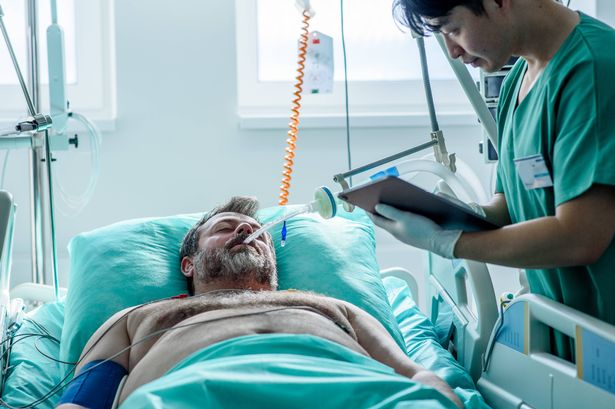
Research is underway to investigate the potential of using an unconventional method, known as “butt breathing,” to enhance oxygen levels in patients when traditional breathing methods fail. Scientists from Cincinnati Children’s Hospital and the University of Osaka are delving into this innovative approach, inspired by the natural oxygen absorption methods observed in certain animals.
The concept was developed by Dr. Takanori Takebe, who became interested in alternative oxygen delivery methods after witnessing the invasive nature of ventilators when treating his father for pneumonia. As reported by Science News, Dr. Takebe drew inspiration from animals that can absorb oxygen through their skin, genitals, or intestinal tracts. He theorized that the human intestinal tract, which is rich in blood vessels, could also facilitate oxygen absorption. This led him to create an enema-like treatment that introduces oxygen-rich liquid into the rectum.
Initial tests on mice and pigs showed promising results, leading to recognition when Dr. Takebe received the 2024 Ig Nobel Prize, a satirical award celebrating unusual scientific achievements. During the award ceremony, he humorously remarked, “Thank you so much for believing in the potential of the anus.”
Human Trials and Future Prospects
The research has now progressed to human trials, with a recent study conducted in Japan involving 27 men. These participants received non-oxygenated enemas to determine the maximum tolerable volume of liquid over one hour. While some individuals reported mild stomach discomfort, the majority managed the procedure well, with only minor bloating and discomfort.
The next phase of testing aims to determine whether this method can effectively deliver oxygen to the bloodstream. If successful in clinical trials, butt breathing could serve as a temporary emergency solution during critical situations, such as ambulance transfers or brief periods before patients can be connected to ventilators.
Pulmonary critical care physician Kevin Gibbs expressed cautious optimism about the research. He noted that the concept of introducing oxygen through the rectum could be beneficial, particularly in scenarios where patients are at risk of dangerously low oxygen levels during intubation. Gibbs explained, “What I find exciting is if this drug works… maybe you can administer this, and then all of a sudden they have this real boost in oxygen for the time it takes you to safely put someone on life support – and that would be huge.”
As the research progresses, the scientific community watches closely to see whether this innovative method can become a viable addition to emergency medical protocols, potentially transforming how healthcare providers manage severe respiratory distress.