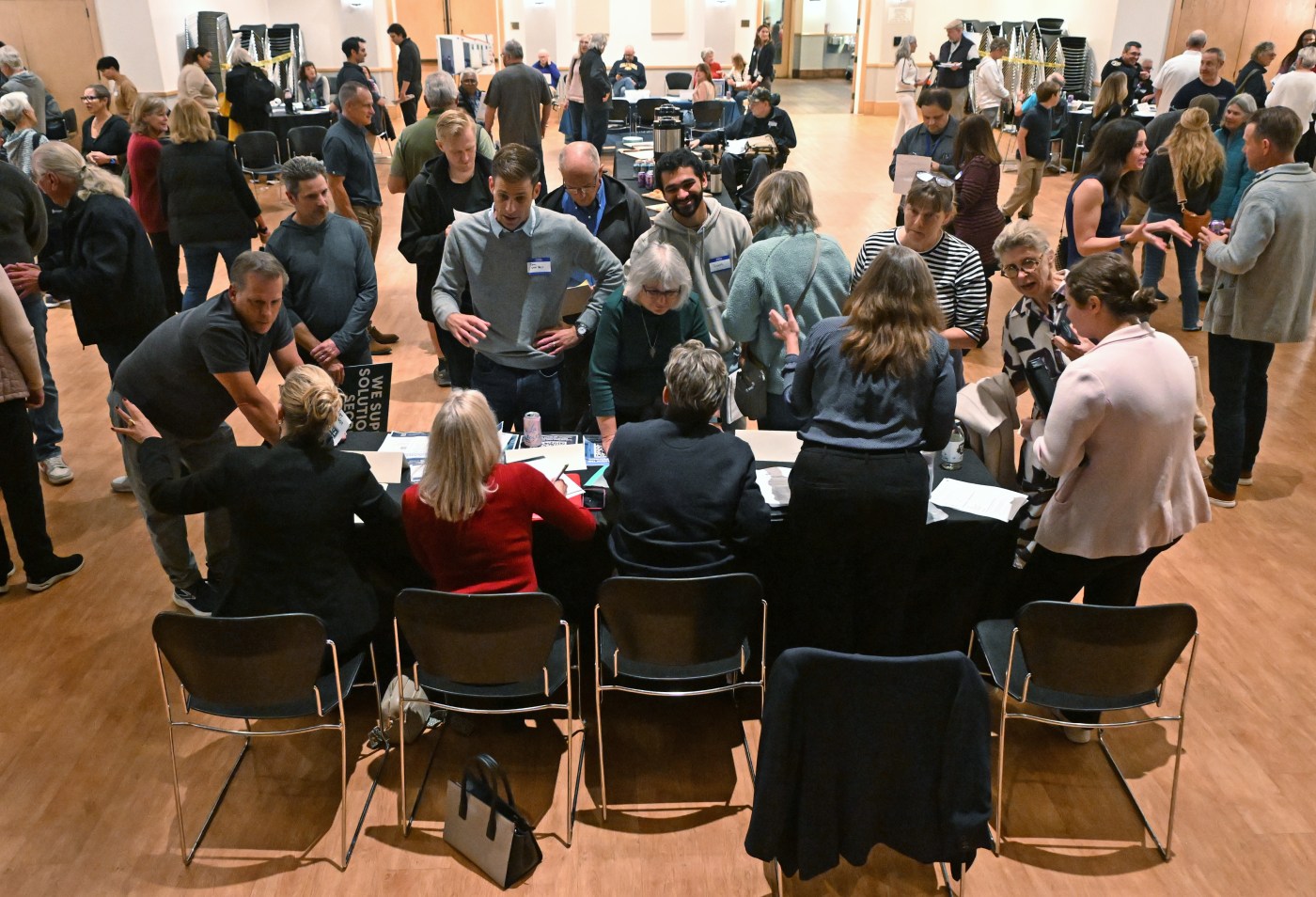
San Rafael officials are under fire from residents regarding a plan to establish a temporary village of cabins aimed at sheltering homeless individuals. The City Council meeting on November 17 saw numerous community members express their concerns about the project, which is set to be located at 350 Merrydale Road in the Terra Linda area, near the Rafael Meadows neighborhood.
Critics have voiced their mistrust, claiming that the city did not adequately engage the community in discussions surrounding the shelter. Ken Dickinson, a resident and member of the group Marin Citizens for Solutions Not Secrecy, highlighted issues with the transparency of the process. “The city released more than 500 pages of documentation just 72 hours before the vote,” Dickinson stated. “For most residents, that made meaningful engagement impossible.”
Residents expressed frustration over the minutes from the November 17 City Council meeting, which they feel did not accurately reflect the strong community sentiment against the plan. Dickinson emphasized that while the council invoked an emergency ordinance to expedite the project, there have been no immediate actions taken to address the urgent needs of homeless individuals in the area.
“The public deserves an accurate record of what actually happened,” resident Marianne Nannestad urged. Fellow resident Jennifer Wallace echoed this sentiment, stating, “It’s essential for transparency and it’s essential for precedent.”
In response to the criticism, City Attorney Rob Epstein explained that the city has not recorded verbatim minutes for several years, opting instead for abbreviated records that capture the actions taken during meetings. City Clerk Lindsay Lara noted her role is to remain neutral in documenting the proceedings, focusing solely on the actions rather than community sentiments.
Opposition to the shelter project stems from allegations that city officials conducted decision-making processes in secrecy. Resident Frank Mason accused the mayor of blindsiding the community by announcing the project without prior notice. “This wasn’t leadership. This was theater,” he remarked, criticizing the lack of transparency surrounding the project’s inception.
Ahead of the meeting, resident Gregory Andrews submitted a letter urging the city to remove an ordinance establishing shelter standards from the consent calendar, a grouping of items typically approved without discussion. He argued that the ordinance lacked sufficient information for informed decision-making.
The City Council unanimously approved the consent calendar, which included the controversial shelter ordinance. The Marin Citizens for Solutions Not Secrecy have since taken further action, filing a court motion for a temporary injunction against the city. They allege that the city violated the Brown Act, a law promoting government transparency, by failing to report decisions made in closed sessions.
The city maintains that no reportable actions were taken during those closed meetings. Despite community pushback, the council declared a homeless shelter emergency on November 17, subsequently approving a grant agreement with the county and authorizing the purchase of the 2.5-acre lot at 350 Merrydale Road.
On November 24, Judge Sheila Shah Lichtblau denied the motion for a temporary injunction, allowing San Rafael officials to move forward with the property acquisition. City Manager Cristine Alilovich announced that the city closed escrow on the property on November 26.
The proposed project aims to construct 65 cabins to shelter up to 70 individuals for a period of three to four years, accompanied by continuous security and support services. The plan includes relocating inhabitants from the city’s sanctioned encampment at Mahon Creek Path to the new site. Additionally, the agreement with the county commits the city to develop an affordable housing project with 80 apartments at the site once the shelter program concludes, with entitlements required by June 30, 2028.
To foster community engagement, the city has scheduled public meetings for December 9 and January 14 to gather input on the plan, including discussions about a proposed “good neighbor policy.”