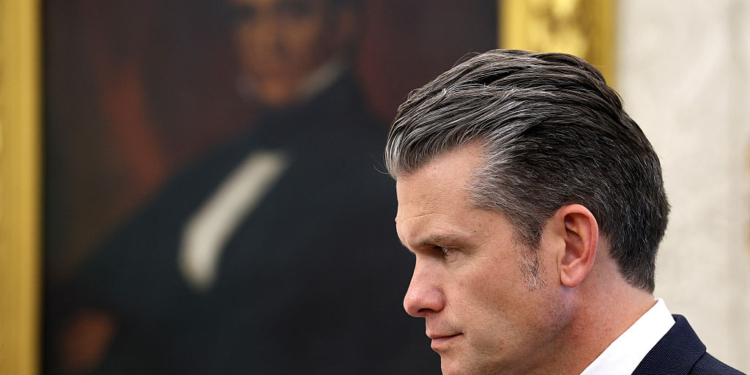
URGENT UPDATE: The Pentagon is facing intense scrutiny for limiting access to critical press briefings, allowing only select media organizations handpicked by Defense Secretary Pete Hegseth. This controversial decision comes as lawmakers investigate U.S. military strikes on suspected drug traffickers in the Caribbean and eastern Pacific, raising significant public concern.
The briefings are scheduled for Tuesday, November 21, with Pentagon press secretary Kingsley Wilson leading the discussions, followed by Hegseth on Wednesday, November 22. These sessions are part of a new onboarding process for a revamped Pentagon press corps, heavily comprised of conservative outlets that agree to stringent operational rules for media conduct.
Major news organizations, including The Associated Press, CNN, Reuters, and Washington Post, reported their requests for access were denied. Marc Lavine, North America regional director for Agence France-Presse, criticized the move, stating, “Denying access to credible and nonpartisan news media that routinely cover the Pentagon is not conducive to transparency for the American public.”
Despite the restrictions, journalists continue to report. Recently, The Washington Post revealed allegations that Hegseth ordered a second strike on a vessel carrying suspected drug smugglers in September, raising concerns that this could constitute a war crime if proven true. President Donald Trump has publicly defended Hegseth, who denies the allegations.
The Pentagon insists that the new guidelines are “common sense” measures aimed at preventing classified information leaks. However, critics argue these rules effectively limit independent reporting and promote a narrative controlled by the Pentagon. The briefings are officially designated for “credentialed press only,” with the possibility of future sessions following similar restrictions remaining unclear.
During the Trump administration, Pentagon briefings have become increasingly infrequent, a stark contrast to previous administrations. There is also uncertainty regarding public access to these sessions, as AFP reported that livestream options may not be available.
Among the newly credentialed reporters, Laura Loomer, who is known for her controversial views, posted a photo on social media from a desk previously occupied by the Washington Post, indicating her readiness to cover the events. The exchange on social media highlights the growing divide in media access and coverage of the Pentagon.
As this situation develops, the implications for media transparency and accountability remain critical. The public deserves to know how their tax dollars are being spent, especially when investigations into military actions are underway.
Stay tuned for updates as the Pentagon presses forward with its newly defined media strategy, and the implications of these briefings unfold.