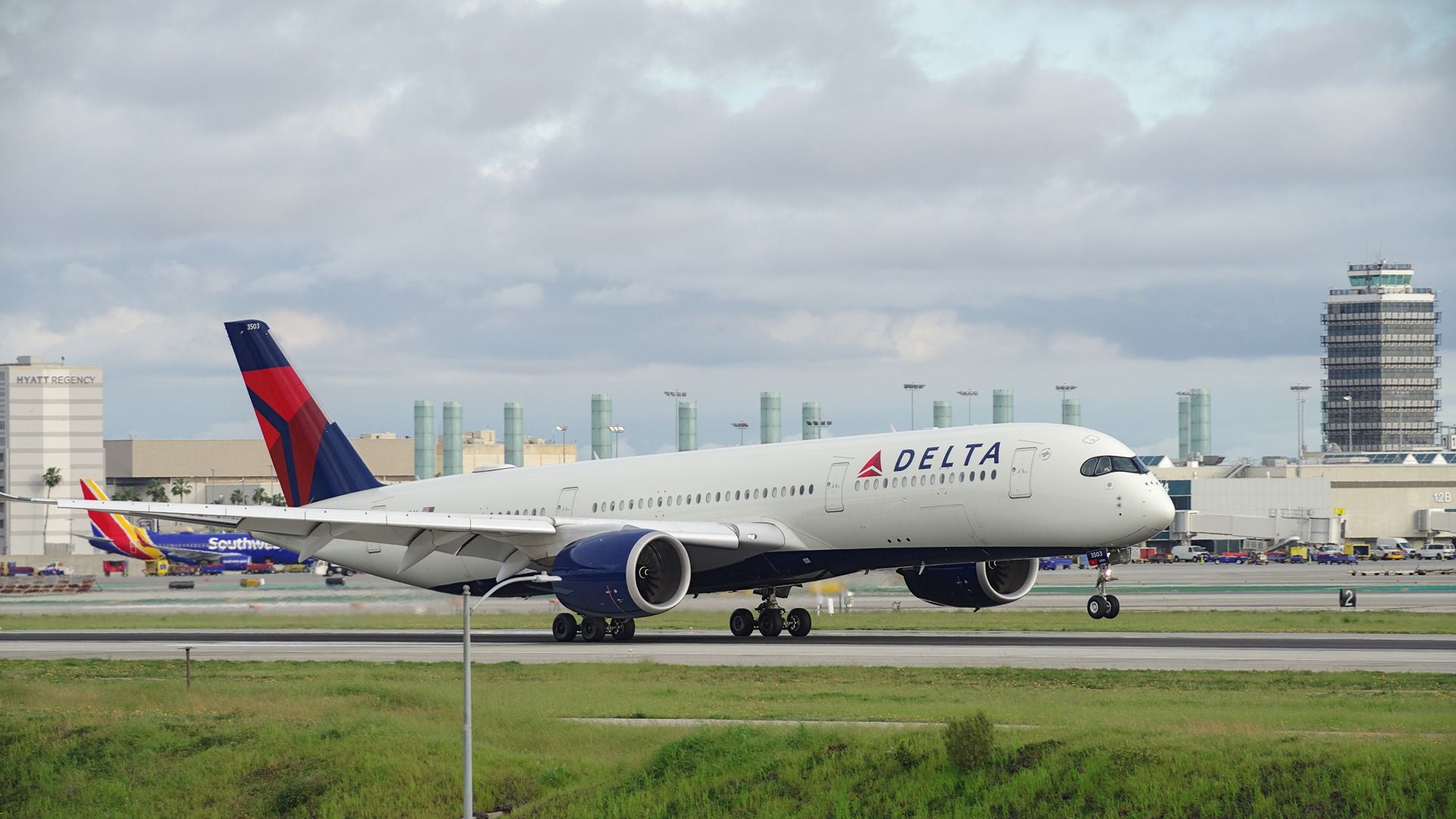
A Delta Air Lines flight made an emergency landing at Tokyo Haneda Airport (HND) on November 28, 2023, after experiencing hydraulic problems while en route from Shanghai to Detroit. The aircraft, an Airbus A350-900 operating as Delta Flight 388, diverted approximately 140 nautical miles (259 km) from its destination after the crew detected a mechanical issue.
The captain’s decision to declare an emergency ensured the aircraft received immediate attention upon landing. Emergency teams were positioned on standby and greeted the flight as it touched down safely on Runway 34R at Haneda Airport. The runway was closed for about 30 minutes to ensure safety protocols were upheld, before the aircraft was towed to the gate.
Delta Flight 388 had departed from Shanghai Pudong International Airport (PVG) at 17:46 local time, aiming for a scheduled arrival at Detroit Metropolitan Wayne County Airport (DTW) at 18:05. According to AvHerald, the flight had just crossed into Japanese airspace when the crew identified the hydraulic issue, prompting them to divert to the nearest major airport.
In a statement, a Delta Air Lines spokesperson said, “On November 28, the crew of Delta Flight 388 followed procedures to divert to Tokyo-Haneda after reporting a mechanical issue while en route from Shanghai to Detroit. The aircraft landed safely, and we apologize to our customers for the delay in their travel plans. Nothing is more important than the safety of our customers and crew.”
Aircraft Specifications and Aftermath
The Airbus A350-900, registered as N512DN and delivered to Delta in January 2019, is notable for its advanced engineering and safety features. This particular model is equipped with two Rolls-Royce Trent XWB-84 engines and features a three-class configuration with 32 Business, 48 Premium Economy, and 226 Economy class seats. It has been a part of Delta’s long-haul fleet, operating on various international routes.
Following the emergency landing, Delta canceled the remainder of the flight. The aircraft remained on the apron overnight before being repositioned to Seattle-Tacoma International Airport (SEA) on November 29. It departed Tokyo at 23:14 local time and arrived in Seattle at 14:26 the following day. Delta subsequently scheduled a corresponding flight to continue to Detroit, which landed at 23:02 on the same day.
The aircraft is one of 38 A350-900s currently in Delta’s fleet, with six more on order. Delta is also preparing to introduce the larger A350-1000 model, expected to join the airline in 2026.
Understanding Hydraulic Issues in Aviation
Hydraulic failures on aircraft like the Airbus A350 are relatively rare but can pose significant risks, including uncommanded movements of flight control surfaces. Such issues necessitate immediate attention and often lead to precautionary measures like diverting to the nearest airport for safety assessments.
The decision by the flight crew to land in Tokyo demonstrates the airline’s commitment to passenger safety. Delta’s ability to manage emergency situations effectively reflects both the training of its personnel and the reliability of its aircraft.
As the A350-900 has returned to service, it continues to operate flights, including a journey from Detroit to Seoul on November 30, indicating a swift recovery from the incident. The airline remains focused on ensuring safety and minimizing disruptions for its passengers.